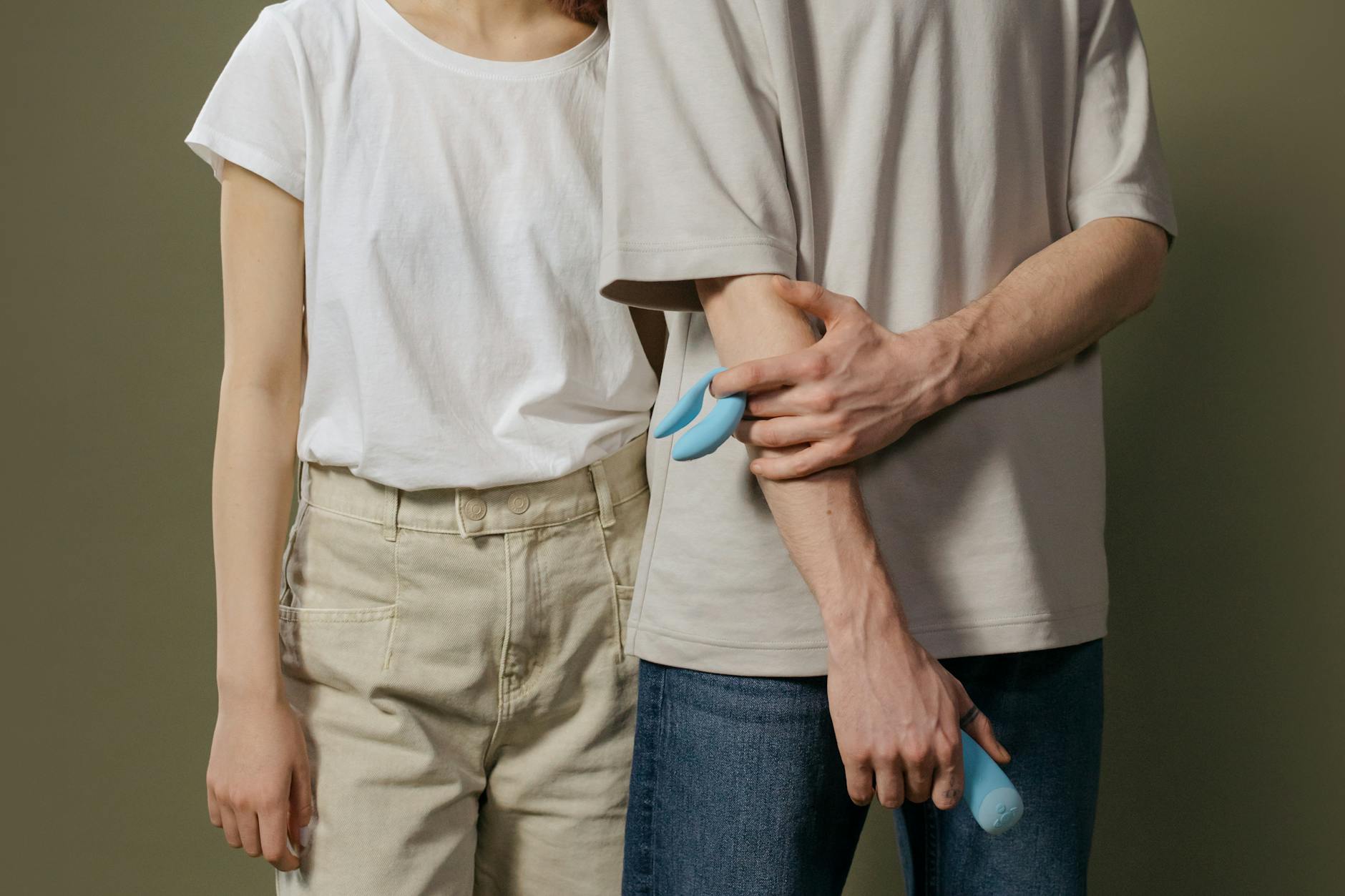
Here's what actually changes when hormones shift
Your lemon vibrator didn't stop working. Your body changed how it responds to it. That's a useful distinction because most people assume sensation is static. It isn't. Hormonal fluctuations from perimenopause, postpartum recovery, hormonal birth control changes, or even significant stress alter the neural pathways, tissue sensitivity, and arousal timeline. None of that means you're broken. It means you need different settings.
Let me walk you through what the science says actually happens, and what it means when you're reaching for your lemon clitoral vibrator.
The tissue and lubrication piece
Estrogen keeps the vulvar tissue thick, elastic, and well-oxygenated. When estrogen drops, tissue thins. Water-based lubrication becomes less automatic during arousal. The clitoris itself doesn't shrink, but the surrounding tissue becomes more delicate. This is completely reversible, and it's not a signal to stop using vibrators. It's a signal to use them smarter.
For people using lemon vibrators or other clitoral suckers, this matters directly. Air-suction toys work by creating a gentle pressure differential. Thinner tissue can feel more sensitive to that suction initially, which means you might need to start on lower settings than you used to. The intensity hasn't changed, but your tissue's response to it has.
Here's the thing nobody mentions: this can actually lead to stronger sensation in some cases. Thinner tissue sometimes transmits vibration more directly to the clitoral nerves. You're not losing capacity. You're sometimes gaining clarity.
Arousal timing shifts
There's an old model where arousal was modeled as a light switch. Hormones make it more like a dimmer. With lower estrogen, your body takes longer to reach peak arousal. You might need 20 minutes of foreplay instead of 10. You might need intentional warm-up with your lemon vibrator on lower patterns before you move to higher intensity.
This isn't degradation. Marathon runners don't sprint immediately. Good sex isn't a race. If you're used to a quick ramp-up, this shift often forces a conversation with yourself or your partner about pacing, which leads to better outcomes overall.
Testo sterone levels also drop with age and hormonal change. Testosterone drives baseline desire, not just in people with penises. If you notice your initial impulse to use your lemon sucker feels quieter, that's neurological, not psychological. It's worth addressing either through conversation with a doctor or by changing how you initiate. Some people find that self-pleasure without a partner agenda actually brings back that spark because there's no external timeline.
What doesn't change (and this matters)
Your clitoris hasn't lost nerve density. The pathways in your brain that process pleasure are intact. Your capacity for orgasm is still there. Some of my clients report that their most intense orgasms came after a hormonal shift, not despite it. This is clinically common. You're not losing your sexual life. You're mid-chapter in it, which is often the richest part.
The patterns on your lemon vibrator still work. The Lem vibrator's specific suction mechanism still delivers targeted stimulation exactly the way it did before. What's different is the dosage and pacing, not the fundamental mechanism.
Practical settings adjustments
If you're noticing your lemon clitoral vibrator feels different, here's what I recommend:
Start lower than you think you need. Pattern 1 or 2 instead of your old default. You can always go up. You can't un-feel intensity that's too strong.
Extend the warm-up. Spend 10-15 minutes with external touch, partner touch, or mental focus before introducing the vibrator. Your body is slower to wake up, and that's okay.
Use lubrication. Water-based, always. Not because something is wrong, but because thinner tissue benefits from it. This isn't a forever accommodation. It's a response to a temporary shift.
Vary the location. If direct clitoral stimulation feels overwhelming, try using your lemon vibrator indirectly. Apply it to the outer labia or the area around the clitoris. You get sensation without intensity.
Experiment with timing. Some people find that vibrator use feels better at different points in their cycle, after coffee, after exercise, or at different times of day. Hormonal shifts often make this variation more pronounced.
The mental and relational shift
Here's what doesn't get talked about enough. Hormonal changes often coincide with other midlife transitions. Kids growing up, career shifts, relationship renegotiation, grief. People assume sexuality dropped because of the hormones. Sometimes it's everything else wearing a hormonal disguise.
I've worked with many couples where the partner says, "They just don't want me anymore." Then we separate that into two conversations. One: the body is responding differently (tissue, timeline, intensity). Two: the person needs different emotional or relational things right now. Merging those conversations creates confusion and blame.
If you're with a partner, the most useful thing you can do is name both. "My body is responding differently to stimulation and I want to explore how to work with that" is not the same conversation as "I need more time and attention from you." They're related, but they're not the same.
When to get professional support
If pain appears, see a gynecologist who specializes in menopause or hormonal health. Genitourinary syndrome of menopause is real and highly treatable, often with topical estrogen cream that has minimal systemic effects. Pain is different from sensation change. Don't assume you have to live with it.
If desire has completely evaporated and isn't returning with time and exploration, testosterone therapy is worth discussing with a doctor who understands it. It's prescribed conservatively in some places and more openly in others, but the option exists.
If the emotional weight of this shift feels heavy, talking to a therapist who understands both hormones and relationships can help. This is a real transition. It deserves real support.
You're not starting over, you're recalibrating
Your lemon vibrator, your clitoral sensitivity, your capacity for pleasure. None of that disappeared. What changed is the interface between your body and stimulation. When you adjust the settings, the warm-up, the lubrication, the timing—when you meet your body where it actually is instead of where it used to be—sensation often becomes sharper, more nuanced, more intentional.
Hormonal shifts can feel like loss. But they're often the beginning of a more honest phase of sexuality, where you're not performing your pleasure for anyone else's script. You're exploring what actually works for you. Your lemon clitoral vibrator is still there for that exploration. You're just using it with new information.
People also ask
Why does my lemon vibrator feel too intense all of a sudden?
Thinner vulvar tissue from hormonal change, lower natural lubrication, and heightened nerve sensitivity can make vibration feel sharper than it used to. You haven't lost tolerance. Your tissue has become more responsive to the same intensity. Try starting on lower patterns. If it's unbearable, see a gynecologist to rule out inflammation or infection.
Can I still use a lemon sucker after menopause?
Absolutely. Many people report that air-suction vibrators like the Lem vibrator actually work better post-menopause because suction doesn't require the same mechanical pressure as traditional vibration. Adjust the setting, use lubrication, and take a longer warm-up. Your pleasure is not over.
Do lemon clitoral vibrators stop working after hormonal changes?
No. The toy works exactly the same way. What shifts is how your body receives that stimulation. Hormonal change alters tissue, lubrication, and arousal speed, not the mechanism of the vibrator itself. Once you adjust settings and technique, sensation usually comes back stronger.
How long does it take for sensation to recalibrate after hormonal shifts?
It varies widely. Some people adapt in weeks. Others take months. Your nervous system is responding to significant chemical change. Be patient with yourself. If it's been more than three months and nothing feels right, that's a conversation to have with a healthcare provider.
Should I use a different lemon vibrator design if my hormones change?
Not necessarily. Your current tool often still works. What changes is how you use it—settings, lubrication, warm-up time, position. If you've been wanting to explore options, this is a good time to talk to a partner or to yourself about what you actually want, separate from what you're used to. The Hello Nancy buying guide can help you think through what sensation you're actually craving.
Is it normal for arousal to take longer after hormonal shifts?
Completely normal. Testosterone drops contribute to this, and lower estrogen changes the speed at which tissue responds to stimulation. You're not broken. You just need a different timeline. Many people find this actually improves sex once they stop fighting it and start building more intentional warm-up time.
The takeaway
Hormonal shifts change how your body interfaces with pleasure. They don't end it. Your lemon vibrator is still a tool that works. Your capacity for sensation is still there. What's different is the dosage, pacing, and attention required. When you meet that with honesty instead of frustration, sexuality often becomes less performative and more genuinely satisfying. That's not a downgrade. That's a recalibration. And recalibration often leads somewhere better.
If you're navigating this shift and want support beyond what reading can offer, reach out to us. We're here to talk through what's actually happening with your body and your pleasure.