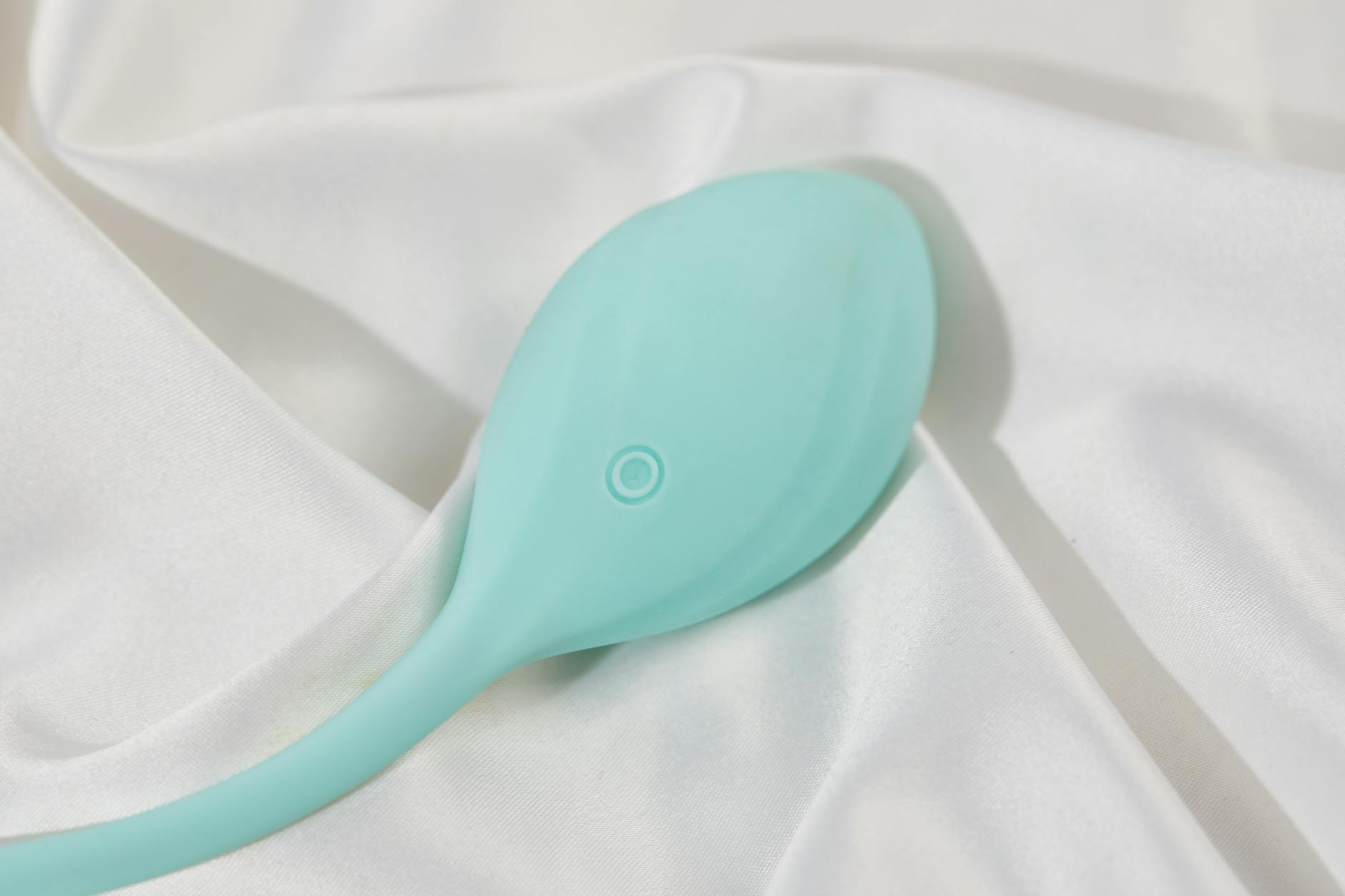
Let's start with the obvious part
Using a lemon vibrator alone is not complicated. But there's a difference between turning something on and using it in a way that actually gets you where you want to go. The distinction matters because a lot of people buy a clitoral vibrator, use it once or twice the way they think it's "supposed" to work, don't have a mind-blowing experience, and assume it's not for them. Usually, it's just about technique.
Here's what I've learned from years of working with clients: the best orgasms come from understanding your own body's rhythm, not from following someone else's instructions. A lemon vibrator is a tool. But like any tool, it works best when you know how to hold it.
Building your setup
First, kill the pressure. You're not trying to perform for anyone. You're exploring what feels good. That shift in mindset changes everything.
Start with basics. Find a comfortable spot where you can actually relax. A bed works. A couch works. A pillow propped up so you're reclined works best for most people because gravity helps and your hands stay free to explore. You want to be able to lie back, breathe, and adjust without strain.
Warm yourself up first. I don't just mean physical warmth, though that matters too. Spend five to ten minutes on things that get your mind in the room: fantasy, reading something that turns you on, touching yourself gently, looking at images that resonate. Your brain is your biggest sexual organ. If it's somewhere else, your body won't follow.
When you're ready, use a water-based lubricant. I know it sounds like extra steps, but it's the difference between "this feels okay" and "this feels amazing." Lubrication reduces friction, which means more sensation with less irritation. A lemon clitoral vibrator works best with a slick foundation.
Finding your entry point
Start on the lowest setting. For most lemon vibrators, that's pattern one or speed one. Turn it on before you touch your clitoris with it.
Approach slowly. Gently place the suction cup or contact point just above your clitoris, not directly on it. Most people jump straight to full contact. That can feel overwhelming. Let your body register the vibration first. If you're nervous about intensity, this matters even more. Indirect contact is your friend.
Notice what happens. Does it feel good? Does it feel like too much? Is it the right rhythm? Your first minute is about gathering information, not chasing an orgasm. That comes later.
Move it slightly. Lemon vibrators work beautifully when you're exploring the area around the clitoris. The external bits, the hood, the sides. Not everywhere on your body is wired the same way. Some spots feel amazing. Others feel like nothing. The only way to know is to try.
Building intensity gradually
Once you've found a spot that feels good, stay there for a moment. Let your body adjust. Then slowly increase the intensity. Most lemon vibrators have clear patterns or speeds. Move up one level. Does it feel better, worse, or just different? There's no wrong answer.
Maintain rhythm. This is huge. Your body needs consistency to build arousal. If you're jumping between patterns every five seconds, your nervous system never gets a chance to build momentum. Pick a pattern that feels good and stick with it for at least one to two minutes. Let arousal climb.
Then change it. When you feel like your arousal is rising, try a different pattern or a slightly higher intensity. Movement helps prevent desensitization and can push you over an edge. But the key is: build first, then shift.
Many lemon vibrators have patterns that ramp or pulse. Those are often more effective than flat vibration because they create natural momentum. Your body responds to variation. If your vibrator has multiple patterns, experiment with two or three that feel distinct and rotate between them as arousal builds.
Positioning and angles
Not every angle works for every body. Some people find that holding the lemon vibrator at a slight angle, pointing slightly downward, feels better than straight pressure. Others prefer angling it inward, toward the internal structures beneath the clitoral surface.
You might also discover that the angle changes as you get more aroused. Early on, gentle might feel right. As arousal builds, you might want more direct pressure. Let your instinct guide you.
Pressure matters more than speed for most people. A slower pattern with firm contact often beats a fast pattern with light touch. You control the pressure by how much of the vibrator's head you're actually pressing against your body. More contact, more sensation. Less contact, less sensation. You can modulate without changing the pattern.
The rhythm that works for you
There are some common patterns I hear about: steady vibration, pulsing, ramping, and alternating. Steady feels grounding. Pulsing feels like it builds in waves. Ramping (gradually increasing and then dropping) mimics natural arousal. Alternating between two speeds keeps things surprising.
None of these is objectively better. The best pattern is the one that your body responds to. Some people finish fastest with steady. Others need the wave of pulsing to get there. Some need ramping that mirrors their own arousal curve.
Here's what I tell my clients: spend a full session just exploring patterns. Not trying to orgasm. Just feeling. Notice which ones make you clench a little, which ones make you relax, which ones make you grip and hold. That feedback is gold. Once you know which pattern your body loves, stick with it during your real session.
When you're close
Orgasm has a momentum. As you approach it, your body naturally wants to tense. Let it. Stop varying the pattern. Stay exactly where you are, with exactly what's working. Pressure, pattern, everything. Your instinct might be to speed up or change intensity. Usually, the opposite works better. Consistency lets your orgasm build and crest.
Some people need to stop thinking and just feel. If you find your mind wandering to your to-do list or how your body looks, gently redirect. A quick fantasy, a memory, a sensation. Anything that brings you back to the physical experience.
Panic is optional. Some people get anxious as orgasm approaches because it feels intense. That's normal. But anxiety tightens things. If you notice yourself tensing up mentally, try breathing. Slow breaths in through your nose, out through your mouth. It sounds corny, but it works.
After the orgasm
The experience doesn't end when you come. You might want to keep going. You might be done. You might want to feel what happens if you shift patterns or intensity now that your body is sensitive.
If sensitivity is overwhelming, simply turn the lemon vibrator off. No shame in that. Some people find that turning down the intensity and continuing for a moment extends the pleasure. Others need a break.
Pay attention to what felt good so you remember it next time. Mental note: that pattern, that pressure, that angle. Your body learns. The second time you use a lemon vibrator, you'll have more information than the first. The fifth time, you'll know exactly what you're doing. That's not just okay. That's the whole point.
FAQ: Common questions about solo play with a lemon vibrator
How long should a solo session with a lemon vibrator last?
There's no rule. Some people finish in five minutes. Some take twenty. Some spend thirty minutes exploring without orgasm as the goal. The clock doesn't matter. You're done when you feel satisfied, which might mean when you've come, or when you've had enough sensation, or when you just want to stop. If you're timing yourself to hit some imaginary target, you've missed the point.
Is it normal to feel numb after using a lemon vibrator a lot?
Desensitization is real, but it's temporary and preventable. Your nerves need recovery time. If you're using a vibrator multiple times a day, every day, you might feel less sensation. Space out your sessions. A few times a week is plenty. You'll also stay sharper if you vary patterns and don't use the highest intensity every single time. Your body adapts to constant stimulus. Variation keeps things fresh.
What if I can't orgasm with a lemon vibrator?
Then it's not your failure, it's your learning phase. Some bodies need specific patterns that your vibrator might not have. Some people need more time. Some need less pressure than the vibrator naturally provides. You might also need a different type of stimulation: a partner, a different toy, or a completely different approach. A lemon vibrator is powerful for most people, but it's not magic. If you've given it five or six genuine tries with patience and it's still not working, you might just need something else. That's information, not a problem.
Can I use a lemon vibrator if I have sensitivity issues?
Absolutely, and a lot of people with sensitivity find that lemon vibrators are gentler than other options because the suction mechanism is different from direct vibration. Start on the lowest setting. Use lube. Approach slowly, with indirect contact. Your clitoris will tell you when it's too much. Listen to that signal. You might also find that certain patterns feel softer than others. Experiment. And if a standard lemon vibrator is still too intense, there are lower-vibration options available, or you might try one of the other designs Hello Nancy offers, like a clitoral massager with lighter pressure.
How do I know if I'm using the right technique?
Your body knows. If something feels good and you're feeling more aroused, you're doing it right. If something feels uncomfortable or makes you tense up, stop and try something different. There's no hidden technique that only some people know. Pleasure speaks a language everyone understands. Pay attention to that feedback.
Should I use the same pattern every time?
Not necessarily. Variation keeps your nervous system engaged and prevents you from getting bored or desensitized. But repetition also works. Some people find a pattern they love and use it every time. If that works for you, that's perfect. Other people rotate. Neither is wrong. Do what feels natural.
What really matters
Using a lemon clitoral vibrator solo is about permission and patience. Permission to explore without judgment. Permission to take your time. Permission to let pleasure be the goal, not some theoretical performance standard.
The technique matters. Pattern, pressure, positioning all matter. But they only matter because they help you stay present and build toward what feels good. That's the actual skill. Not following steps perfectly. Just knowing your body well enough to give it what it needs.
If you're new to this or finding that solo play feels awkward, start with the foundation: a good setup, lube, and genuine curiosity instead of pressure. The rest follows. Your body already knows what to do. You're just giving it a tool that helps.
Want to talk through what you're experiencing or need personalized guidance? Reach out to us. We're here to help.