Let's be real about what happens to pleasure in long-term relationships
After five years, ten years, twenty years together, desire doesn't vanish. It transforms. You stop reaching for each other on Tuesday nights. Sex becomes scheduled or less frequent. Pleasure starts feeling less like something you create together and more like something that requires a lot of setup and emotional overhead.
Honestly? That's not a failure. It's a completely normal arc. The question isn't whether this happens. It's whether you decide to do something about it.
Why pleasure actually fades (and it's not what you think)
Most couples assume the problem is physical. Bodies change. Attraction is supposed to decline. You've seen each other in every lighting condition and emotional state. There's a grain of truth here, but it's not the real story.
What actually happens is simpler and more fixable: you stop talking about pleasure. You stop asking. You assume your partner still knows what you want, or you assume they don't care, or you assume asking will feel needy. Meanwhile, your partner is making the exact same assumptions. The disconnect grows quietly.
Add stress, kids, work, caregiving, illness, or just the weight of knowing someone completely. Physical desire requires psychological safety. When you're running on empty or managing resentment, your brain doesn't prioritize arousal. Evolution doesn't care that you've been monogamous for fifteen years. It still needs to know you're not in survival mode.
The conversation that actually works
Here's what doesn't work: "We never have sex anymore" or "I miss how things used to be." Both are true and both are conversation stoppers. Your partner hears blame. They get defensive. Nothing changes.
What works is specificity plus vulnerability. Try: "I miss how connected we feel after we've been intimate. I want to find a way back to that, and I'm not sure how. Can we talk about what would feel good for both of us?"
That sentence does three things. It names something real you've lost. It makes it a mutual problem, not their failure. It opens the door to actual information.
The goal of that conversation is not to schedule sex tomorrow. It's to answer three questions together: What did pleasure used to feel like? What does it feel like now? What would we need to change to enjoy it again?
Some of the answers will surprise you. Your partner might say they feel less desired. You might realize you stopped initiating because you assumed they weren't interested. Neither of you was wrong. You just weren't talking.
The role of novelty (and why it doesn't have to mean affairs)
Our brains are wired for novelty. After years with the same person, the same rhythm, the same location, arousal can feel flat. This doesn't mean you need a new partner. It means you need to introduce something new into what you already have.
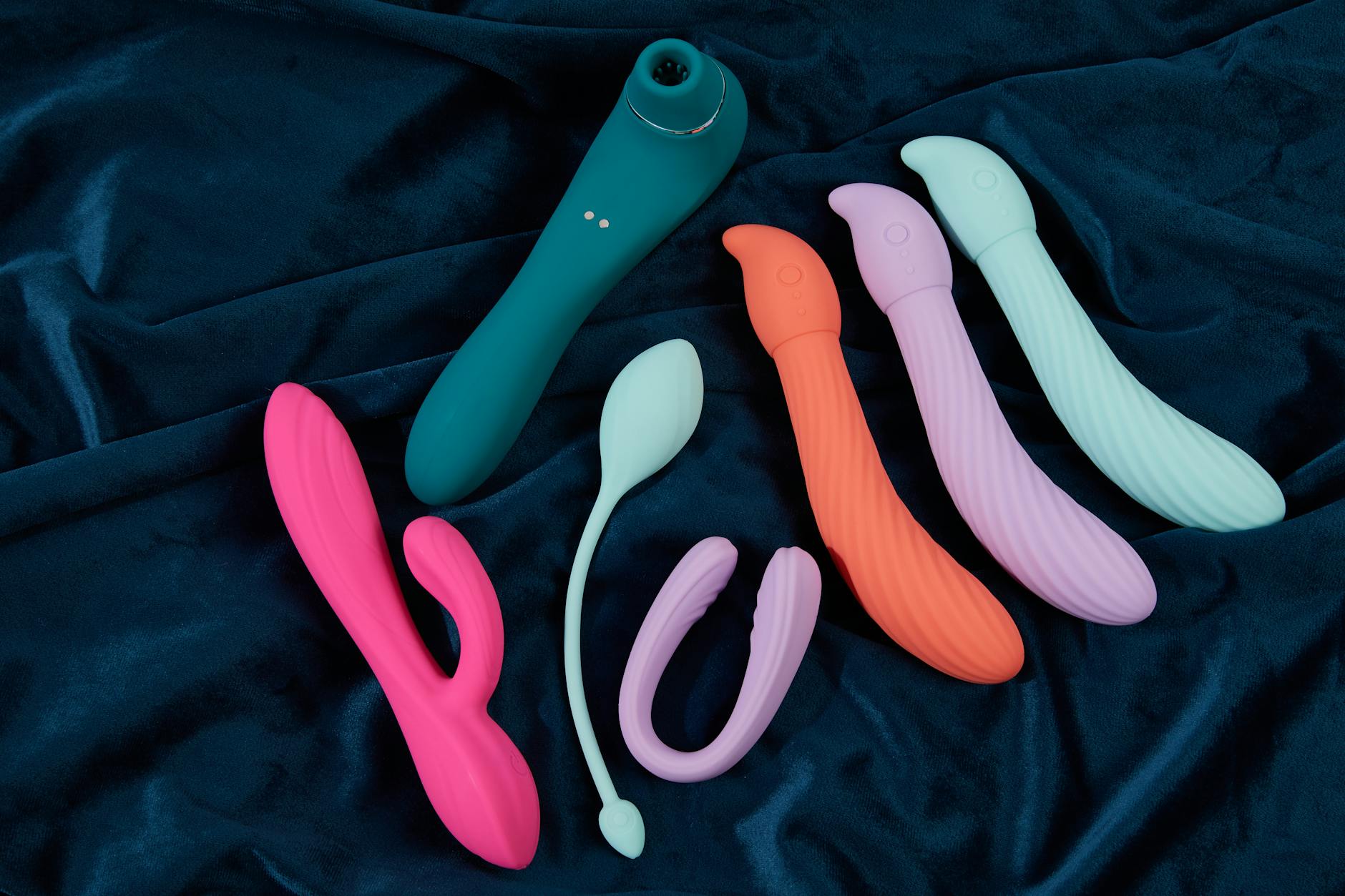
Novelty can be a different room, a different time of day, different positions, or a different tool. This is where clitoral vibrators like Hello Nancy's lemon sexual toys come in. They're not a substitute for your partner or a sign that something is broken. They're a conversation starter and a way to introduce physical sensation that feels genuinely new.
For people with vulvas, clitoral vibrators can feel revelatory after years in a long-term relationship. The specificity of stimulation they provide is often impossible to replicate manually. If you've never used one, the first time you experience it can reset your nervous system around pleasure entirely. Suddenly you remember what arousal actually feels like.
The genius part: your partner can be part of this. Using a lemon vibrator together, or having your partner use one on you, is collaborative. It's not you taking something away from them. It's both of you deciding that pleasure matters enough to actively create it.
How to introduce tools without making it weird
The barrier here is rarely the tool itself. It's the conversation. People worry it will feel like rejection or that their partner will think they're not satisfied.
Frame it this way: "I read that a lot of couples in long-term relationships use vibrators to switch things up and reconnect physically. I'm curious if you'd be open to trying that together. No pressure, just something I've been thinking about."
You're not criticizing them. You're introducing an idea that other people do, which normalizes it immediately. You're also being specific about wanting to do it together, which matters.
If your partner says no, that's information too. Explore why. Sometimes the hesitation is about insecurity (worry that you prefer the toy to them). Sometimes it's about unfamiliarity. Sometimes they genuinely prefer the simplicity of what you already do. All of that is worth understanding instead of just accepting no and moving on.
If they say yes, start simple. A lemon clitoral vibrator is intuitive. There's no learning curve. You don't need instructions. You just use it and see what happens. Many couples find that the first time they use one together, something shifts. Pleasure becomes playful again instead of serious.
The physical rituals that matter more than you'd expect
After years together, pleasure often gets crowded out by efficiency. You know what I mean. Sex becomes something that fits into a Friday night slot after you've dealt with everything else, if you're not too tired.
One of the simplest things I recommend to couples is building a tiny ritual around intimacy. This doesn't mean candles and rose petals. It means deciding that on Thursday nights, you both turn off your phones in the bedroom for thirty minutes. That's all. No obligation to have sex. Just thirty minutes where you're physically present with each other.
What usually happens is that within a few weeks, desire starts returning naturally. Your nervous system learns it's safe to relax. Your brain anticipates something good. Your partner's presence starts registering as pleasurable again instead of as part of the household management loop.
Pair this with novelty tools like Hello Nancy's lemon adult toys, and you've just reset a system that felt stuck.
When resentment is the real barrier
Sometimes pleasure fades because there's a deeper problem underneath. One partner feels unseen or undervalued. There's been betrayal, neglect, or just years of unresolved conflict. In those situations, a vibrator isn't going to fix anything. Honesty about what's actually broken will.
If pleasure has disappeared entirely and conversations aren't moving anything, that's the sign you might benefit from a couples therapist. Not because there's something wrong with you. Because sometimes you need a neutral person to help you name what's really happening. Often, once that's clear, pleasure comes back on its own.
The permission you might be waiting for
Here's what I want to say plainly: your pleasure matters. After years in a relationship, after kids or career or just life, you might have gotten good at deprioritizing yourself. You might believe that good partners don't ask for much, that wanting something physically exciting is selfish or immature.
It's not.
You deserve to feel desired. Your partner deserves to feel desire. That desire doesn't have to look like it did at the beginning. It can be deeper, more intentional, more creative. It can include tools like lemon vibrators that make the experience better for both of you.
The couples who reconnect physically in their tenth or twentieth year together aren't the ones who had it naturally easy. They're the ones who decided that pleasure was worth talking about, worth planning for, and worth trying new things to access again. You can be one of those couples. You just have to start the conversation.
People also ask
How do I bring up the fact that I'm not satisfied sexually without hurting my partner's feelings?
Start by naming what you want, not what's missing. "I'd love to explore more sensations together" is different from "I'm not satisfied with what we're doing." The first invitation. The second accusation. Also separate the conversation from a moment when you're either in bed or actively frustrated. Pick a calm time and remember: your partner probably wants you to be satisfied too. They might just not know how.
Can using a vibrator together actually help a struggling relationship?
A vibrator alone won't fix a broken relationship, but it can help couples reconnect physically if the emotional foundation is still there. Sometimes physical reconnection is the entry point to emotional reconnection. Other times, you need to address the deeper issues first. Honest conversation matters more than any tool.
What if my partner thinks I want a vibrator because they're not enough?
This is the most common worry and the easiest to address directly. Tell them: "I'm interested in this because I want to feel more pleasure with you, not instead of you. This is about us, not about you being insufficient." Then show them. Use it together. Let them see that they're still the person you're connected to. The tool just enhances the experience.
Is it normal for desire to decrease after years together?
Completely. Desire shifts from that early, automatic spark to something more intentional and slower to build. That's not a loss. It's just different. The couples who maintain strong sexual connection long-term are usually the ones who accept this shift and get more creative about pleasure instead of mourning the old version.
How often should we be intimate to keep connection strong?
There's no magic number. Some couples feel connected with twice a week. Others thrive with once a week or twice a month. What matters is that both partners feel satisfied with the frequency and that desire is mutual. If one person wants significantly more or less, that's worth exploring together.
What's the best way to introduce a lemon vibrator or clitoral vibrator if we've never used one before?
Start with a conversation first, not by surprising them with a toy in the bedroom. Once they've agreed, keep the first experience low-pressure. There's no performance element. Just explore it together like you're both curious. Many people find that a Hello Nancy lemon sucker like the Lem or the Avocado feels intuitive immediately. Let the physical experience speak for itself.
The long view
Long-term relationships are supposed to evolve. The pleasure you access at year fifteen doesn't look like the pleasure at year one. But it can be deeper, more collaborative, and more intentional. That requires conversations that feel vulnerable. It requires trying things that feel unfamiliar. And sometimes it requires tools that help you access sensations you thought were long gone.
The couples I work with who genuinely enjoy each other after decades together aren't the ones who got lucky with chemistry. They're the ones who kept showing up to the conversation about what pleasure could look like. They got curious instead of resigned. They tried things. Some of those things worked. Some didn't. But they never stopped asking the question: what would feel good for both of us right now?
That question is always available to you. It's not too late. Your relationship isn't too stale. The answer might surprise you.
Ready to have the conversation with your partner? Start small. Tell them you've been thinking about reconnecting physically and you'd like to explore that together. See where that leads. If you want more structure around how to approach this, reach out. That's exactly what we're here for.